




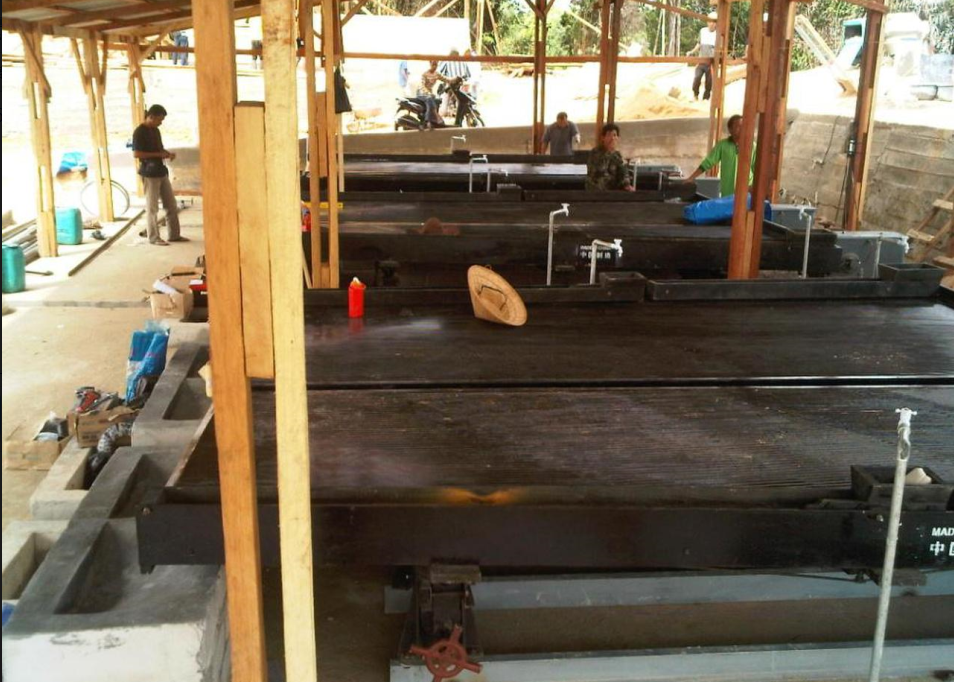
Shaking table
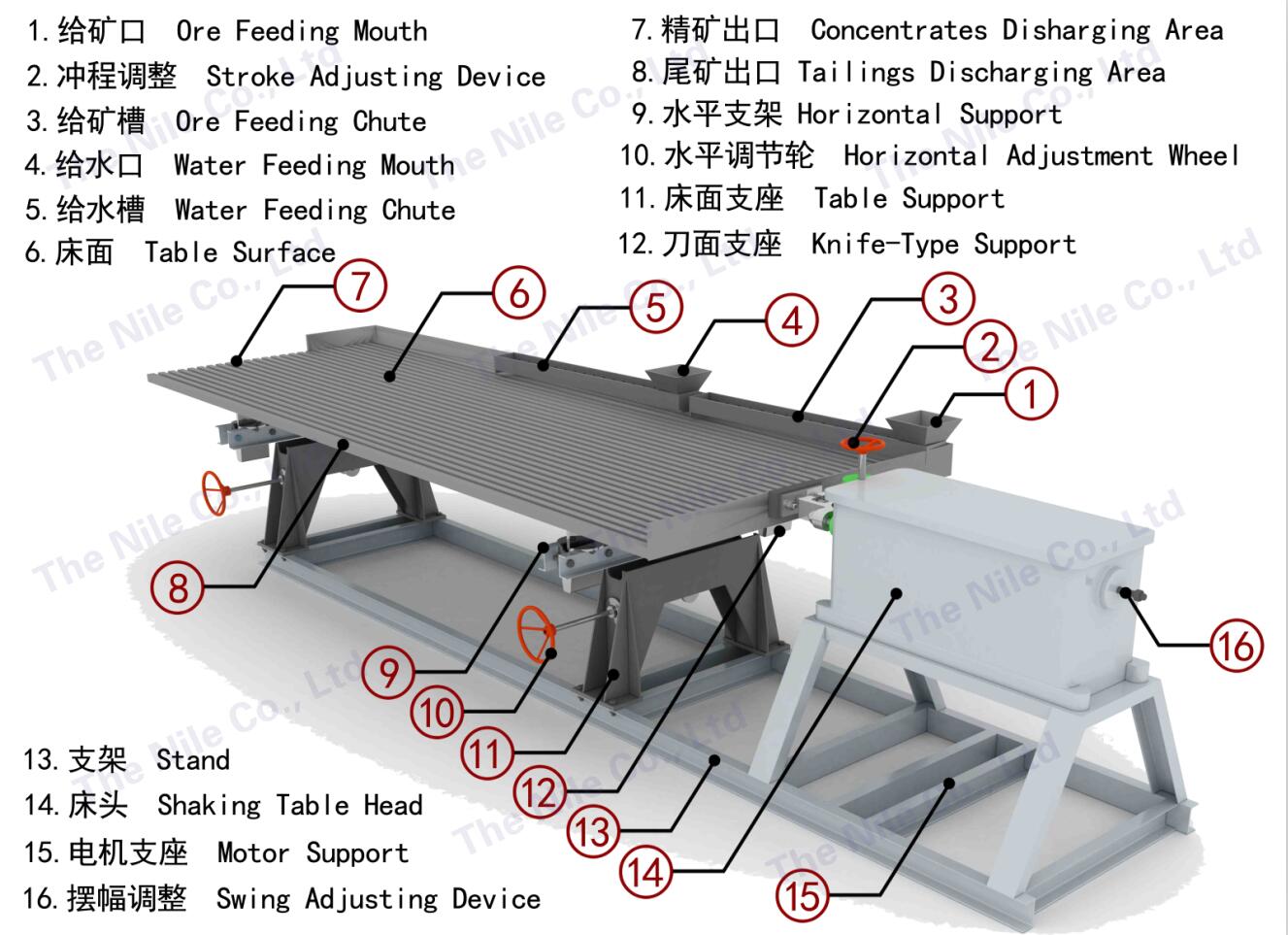
Shaking table is a gravity separation machine widely used in mineral processing, particularly for the separation of gold and coal. The main components of a shaking table include the head drive, electric motor, inclination adjustment mechanism, deck, feed chute, water distributor, riffle bars, and lubrication system.
Easy ways to get the answers you need. Service Online
Introduction
The shaking table is widely used in the mineral processing industry, offering multiple operating modes including roughing, cleaning, and scavenging. It is suitable for separating metallic ores and heavy minerals, such as gold, silver, tungsten, zinc, iron, manganese, lead, and coal. The shaking table can process materials of various sizes: coarse sand (2–0.5 mm), fine sand (0.5–0.074 mm), and slimes (-0.074 mm). For tungsten, tin, and other metallic ores, the effective recovery particle size range is 2–0.22 mm.
Working principle
The crankshaft rocker moves up and down as the shaking table belt is driven by the motor. When the rocker moves downward, materials are fed onto the inclined deck through the feed hopper, while the water channel supplies wash water across the deck. In this way, the table vibrates as water flows over the surface. Materials of different densities are separated and flow in different directions toward the concentrate and tailings discharge ends. The shaking table has undergone significant improvements over generations of development.
Advantages
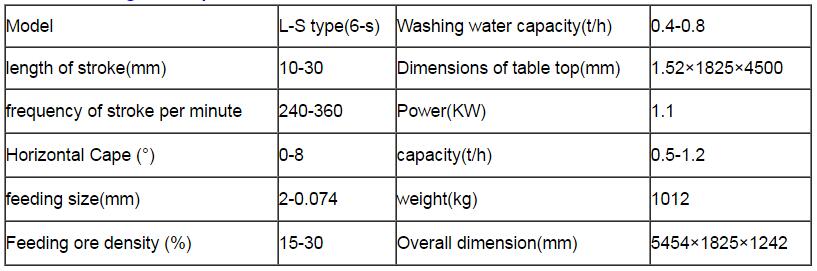
The shaking table is widely used in the mineral processing industry, offering multiple operating modes including roughing, cleaning, and scavenging. It is suitable for separating metallic ores and heavy minerals, such as gold, silver, tungsten, zinc, iron, manganese, lead, and coal. The shaking table can process materials of various sizes: coarse sand (2–0.5 mm), fine sand (0.5–0.074 mm), and slimes (-0.074 mm). For tungsten, tin, and other metallic ores, the effective recovery particle size range is 2–0.22 mm.
Working principle
The crankshaft rocker moves up and down as the shaking table belt is driven by the motor. When the rocker moves downward, materials are fed onto the inclined deck through the feed hopper, while the water channel supplies wash water across the deck. In this way, the table vibrates as water flows over the surface. Materials of different densities are separated and flow in different directions toward the concentrate and tailings discharge ends. The shaking table has undergone significant improvements over generations of development.
Advantages
1. High Separation Precision
Its key advantage is its high separation precision. A single separation process can produce qualified concentrate, middlings, and tailings directly from the raw ore.
2. High Enrichment Ratio
The enrichment ratio—the ratio of concentrate grade to raw ore grade—can reach 100:1 or higher, outperforming many conventional mineral processing methods.
3. One-Step Separation
Qualified concentrate and tailings can be obtained in a single separation stage, simplifying the processing flow and reducing equipment requirements.
4. Easy Observation and Adjustment
The ore is evenly distributed across the bed surface in a fan-shaped pattern, making the separation process easy to observe and adjust in real time.
5. Heavy-Duty, Wear-Resistant Construction
The equipment features a large, high-strength channel steel frame, a wear-resistant FRP bed surface, and polypropylene feed and concentrate collection launders for reliable long-term operation.
6. Reagent-Free & Low Energy Consumption
No chemical reagents are required during the separation process, resulting in low operating costs and energy consumption.
Request for Quotation
You can get the price list and a NILE representative will contact you within one business day.

 WhatsApp
 E-mail
 Chat Now