




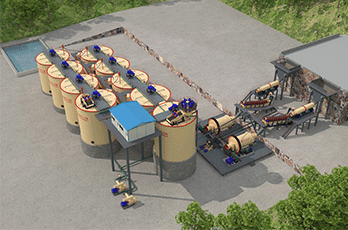
Gold CIP CIL Plant
CIL (Carbon In Leach) is a gold extraction method developed from the carbon-in-pulp (CIP) process. This technology integrates activated carbon into the cyanide leaching tank, enabling simultaneous adsorption and leaching of gold, significantly improving recovery and production efficiency. It is an eco-friendly and compliant mineral processing solution.
Easy ways to get the answers you need. Service Online
Application
The gold CIL process is suitable for beneficiating oxidized gold ores with low sulfur content and high mud content, fine-grained disseminated gold ores, gold tailings after amalgamation with gravity separation, difficult-to-treat gold ores containing arsenic or carbon, low-grade gold mines, and gold with associated silver and copper content.
Working Principle
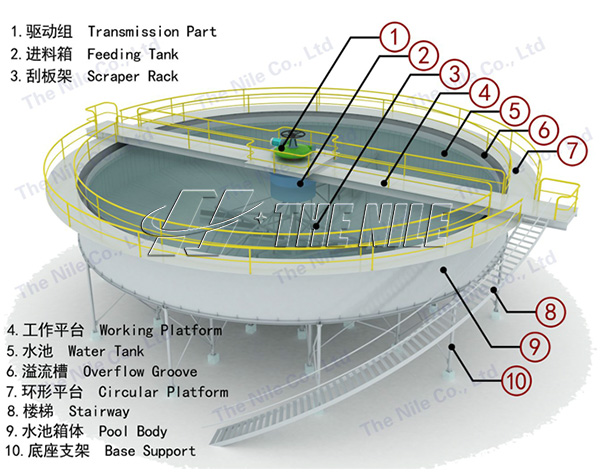
CIL is a cyanide-based gold extraction process. Firstly, the raw material is crushed to less than 10 mm by various types of crushers. Secondly, the crushed material is ground and classified to 90% passing 200 mesh. The fine powder is then fed into a thickener. After thickening, chemicals are added and the slurry is leached in the leaching tank. Following leaching, activated carbon is used to adsorb the gold, producing gold-loaded carbon. Finally, electrowinning or smelting is applied to produce gold bars.
Introduction to Flow Chart
A. Raw materials preparation:
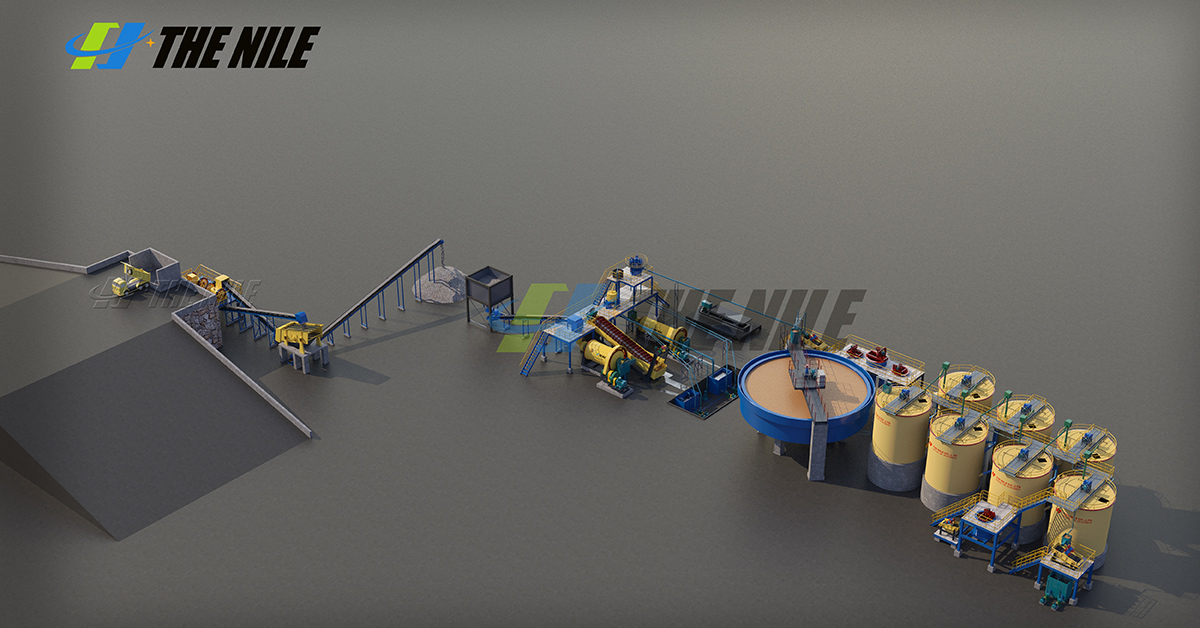
The raw ore is fed to the primary crusher via a vibrating feeder, and then to the secondary crusher via a belt conveyor. The crushed ore is then fed to a vibrating screen for separation. The undersize ore is sent to a powder silo. The oversize ore is then fed to the tertiary crusher via a belt conveyor for secondary crushing, and the crushed ore is again fed to a vibrating screen for separation. This process flow is called a three-step closed-loop crushing process flow diagram.
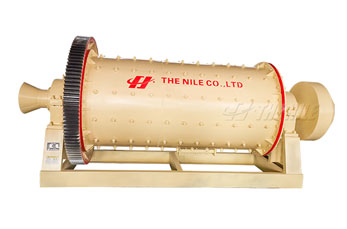
The raw materials in the powder silo are fed to the first ball mill via a feeder and belt conveyor. The ball mill discharge is sent to a spiral classifier, where larger particles are returned for secondary grinding. Overflow material is pumped to a hydrocyclone and then classified in a second ball mill: larger particles enter the second ball mill, and the discharge is returned to the second ball mill. This process is called a two-step, two-closed-loop circulating grinding process. Overflow material from the hydrocyclone is sent to a screening machine and a thickener.
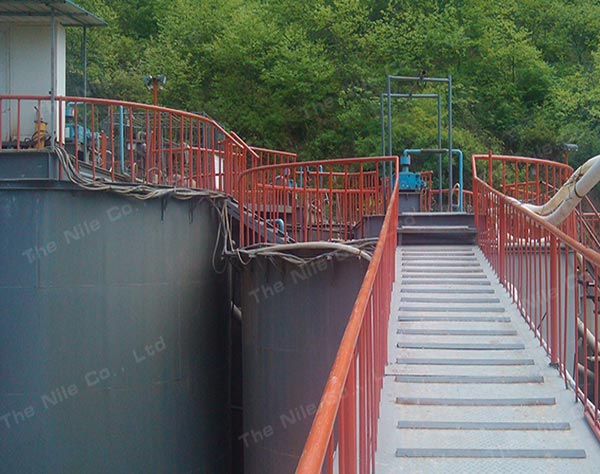
B. Leaching and adsorption:
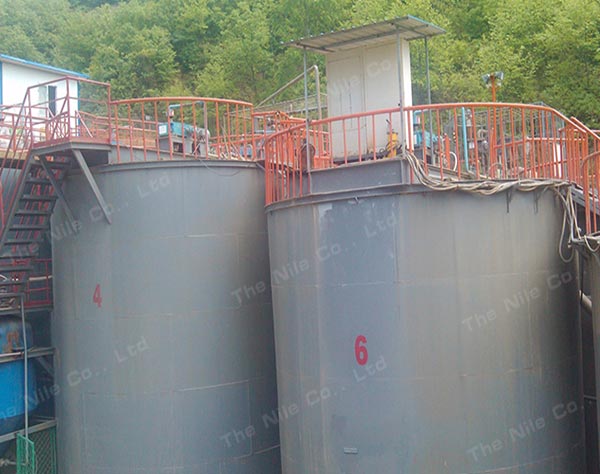
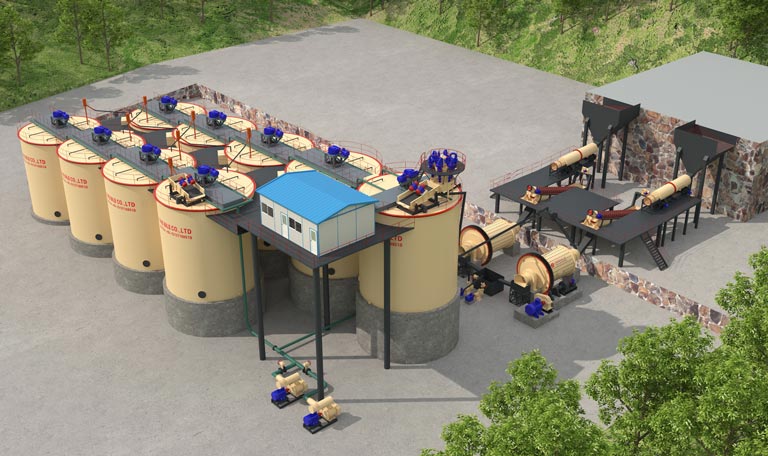
The slurry will enter eight sets of double-impeller leaching tanks; a fully mixed sodium cyanide leaching agent will be added to the first tank; activated carbon will be added sequentially from the second to the eighth tank; the activated carbon in the second tank will be lifted to a carbon screen to obtain gold-bearing activated carbon, which will then be washed and enter the desorption electrolysis system; the remaining slurry will be returned to the second tank; the activated carbon will be lifted countercurrently from the adjacent tank by an air lifter; the tailings will be screened to recover fine gold-bearing activated carbon and then enter the tailings treatment stage.
C. Tail water treatment:
Tailings are lifted to a filter press, and the filter cake, also known as tailings, is transported to a stockpile via belt conveyor and trucks. The filtrate is then recycled into a circulating water tank, which helps save on lime and sodium cyanide.
D. Gold-loaded carbon treatment:
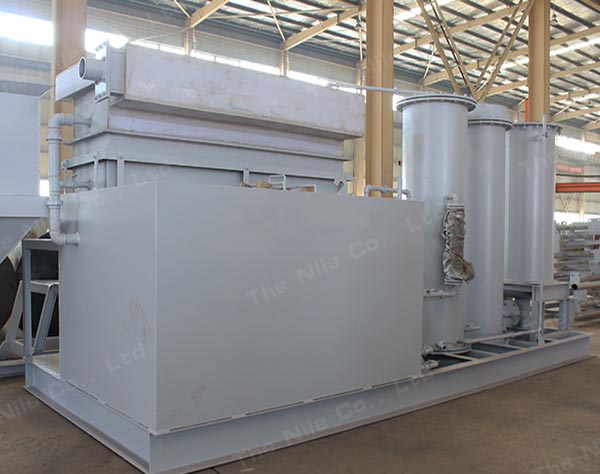
Gold-containing carbon is processed in batches using a desorption electrolysis device to obtain gold powder. The gold powder is then fed into a smelting furnace to be smelted into gold bars. The electrolyzed gold-containing carbon can be returned to the final stage of the process flow for further processing.
Request for Quotation
You can get the price list and a NILE representative will contact you within one business day.

 WhatsApp
 E-mail
 Chat Now